My Favorite Images from the Planetary Photojoural
I have 6 images in my list


The first time you select an image to My List, a separate browser window will open. This page will list the set of images you have selected as favorites from the Photojournal. This list is kept for a short period of time, approximately 60 days. The way we associate you with your list is through a persistent cookie left on your computer. This cookie is nothing more than a unique key that allows the Photojournal to make this association. Once created, this list is only modifiable from the same computer. Information stored in the cookie on your computer is used by the Photojournal server only during your session. If you configure your Web browser not to use cookies, you will not be able to create and refer back to a personal list of favorite images. To view your current list, click on a marked entry for your list from the catalog page, or add another favorite. For more information, see JPL's Privacy Policy.
My
List
Catalog # Target Mission Instrument Addition Date Size
Remove Image from Favorite List PIA12310 Cassini-Huygens
Magnetospheric Imaging Instrument
2009-10-15 1280x720x3
The Bubble of Our Solar System
Title:
The Bubble of Our Solar System
Remove Image from Favorite List PIA12014 VB 10 2009-05-28 2400x3000x3
This artist's diagram compares our solar system (below) to the VB 10 star system. Astronomers successfully used the astrometry planet-hunting method for the first time to discover a gas planet, called VB 10b, around a very tiny star, VB 10.
Title:
Bizarre Planetary System
Remove Image from Favorite List PIA12015 VB 10 2009-05-28 3000x2400x3
This artist's concept shows the smallest star known to host a planet. The planet, called VB 10b, was discovered using astrometry, a method in which the wobble induced by a planet on its star is measured precisely on the sky.
Title:
A Planet as Big as its Star
Remove Image from Favorite List PIA12210 Spitzer Space Telescope
2009-09-23 3000x2400x3
This artist's conception shows a lump of material in a swirling, planet- forming disk. Astronomers using NASA's Spitzer Space Telescope found evidence that either another star or a planet could be pushing planetary material together, as illustrated here.
Title:
Lump of Planetary Stuff
Remove Image from Favorite List PIA12169 Cepheus B Chandra X-ray Observatory
Spitzer Space Telescope
Chandra X-ray Telescope
IRAC
2009-08-12 2749x3600x3
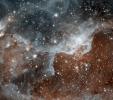
This composite image, combining data from NASA's Chandra X-ray Observatory and Spitzer Space Telescope shows the star-forming cloud Cepheus B, located in our Milky Way galaxy about 2,400 light years from Earth
Title:
Trigger-Happy Cloud
Remove Image from Favorite List PIA12164 Spitzer Space Telescope
IRAC
2009-08-05 1493x1319x3
This image is one of the first to be taken during Spitzer's warm mission -- a new phase that began after the telescope, which operated for more than five-and-a-half years, ran out of liquid coolant.
Title:
Spitzer's First Warm Images