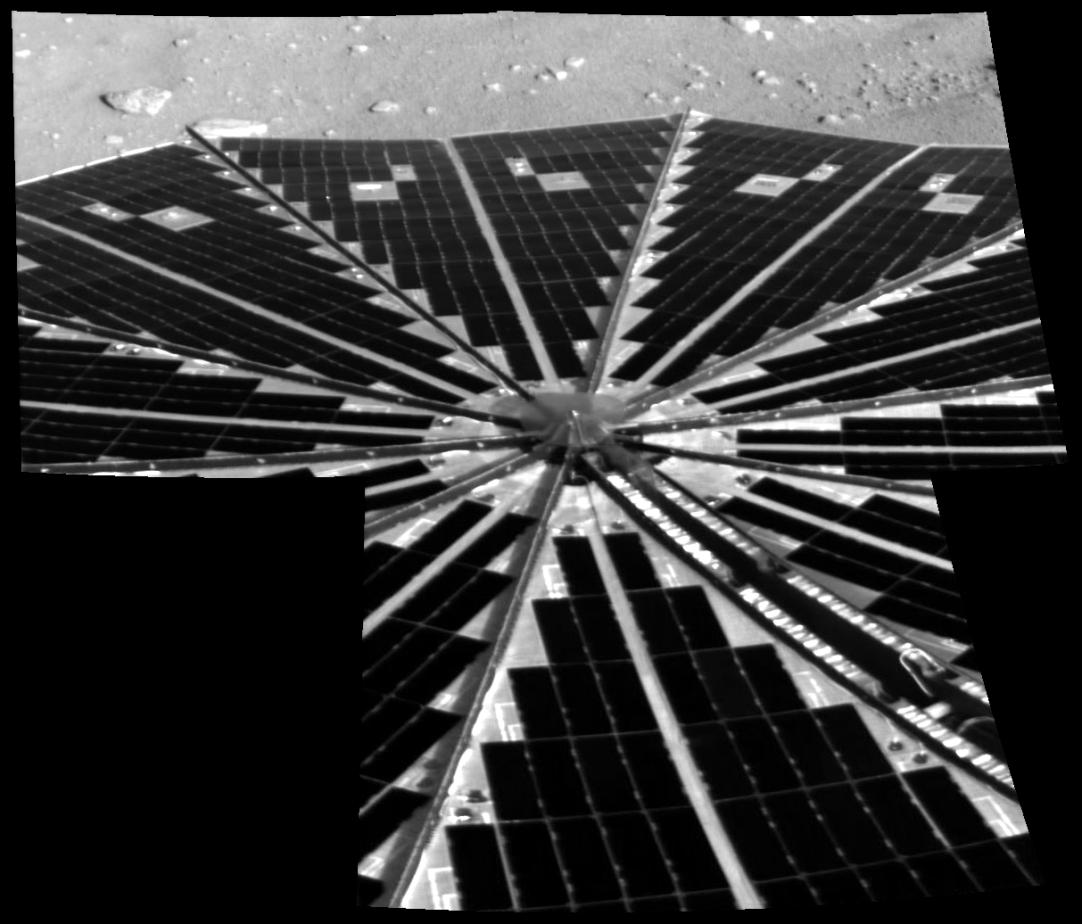
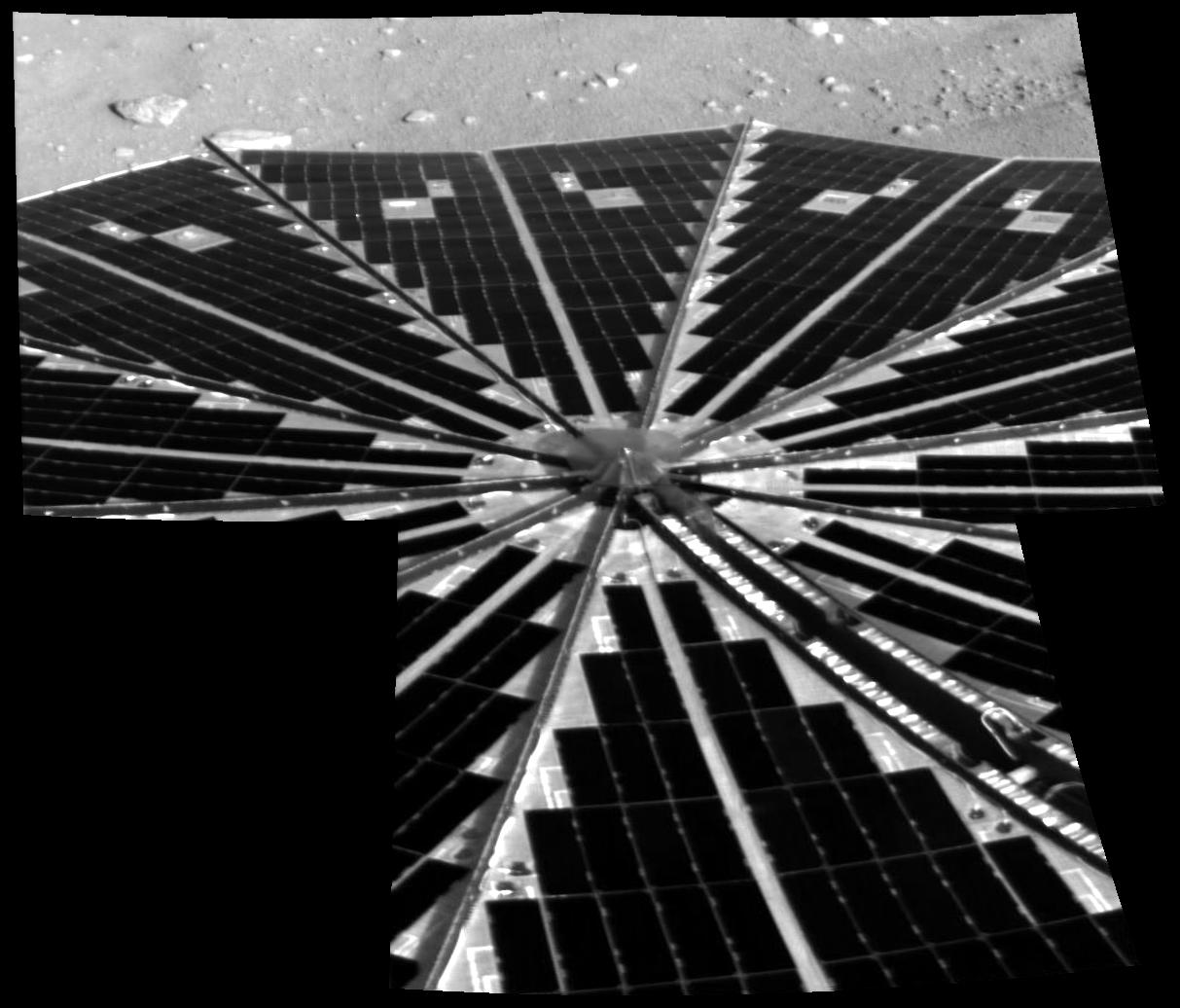
Shown here is one of the first images taken by NASA's Phoenix Mars Lander of one of the octagonal solar panels, which opened like two handheld, collapsible fans on either side of the spacecraft. Beyond this view is a small slice of the north polar terrain of Mars.
The successfully deployed solar panels are critical to the success of the 90-day mission, as they are the spacecraft's only means of replenishing its power. Even before these images reached Earth, power readings from the spacecraft indicated to engineers that the solar panels were already at work recharging the spacecraft's batteries.
Before deploying the Surface Stereo Imager to take these images, the lander waited about 15 minutes for the dust to settle.
This image was taken by the spacecraft's Surface Stereo Imager on Sol, or Martian day, 0 (May 25, 2008).
The Phoenix Mission is led by the University of Arizona, Tucson, on behalf of NASA. Project management of the mission is by NASA's Jet Propulsion Laboratory, Pasadena, Calif. Spacecraft development is by Lockheed Martin Space Systems, Denver.
Photojournal Note: As planned, the Phoenix lander, which landed May 25, 2008 23:53 UTC, ended communications in November 2008, about six months after landing, when its solar panels ceased operating in the dark Martian winter.