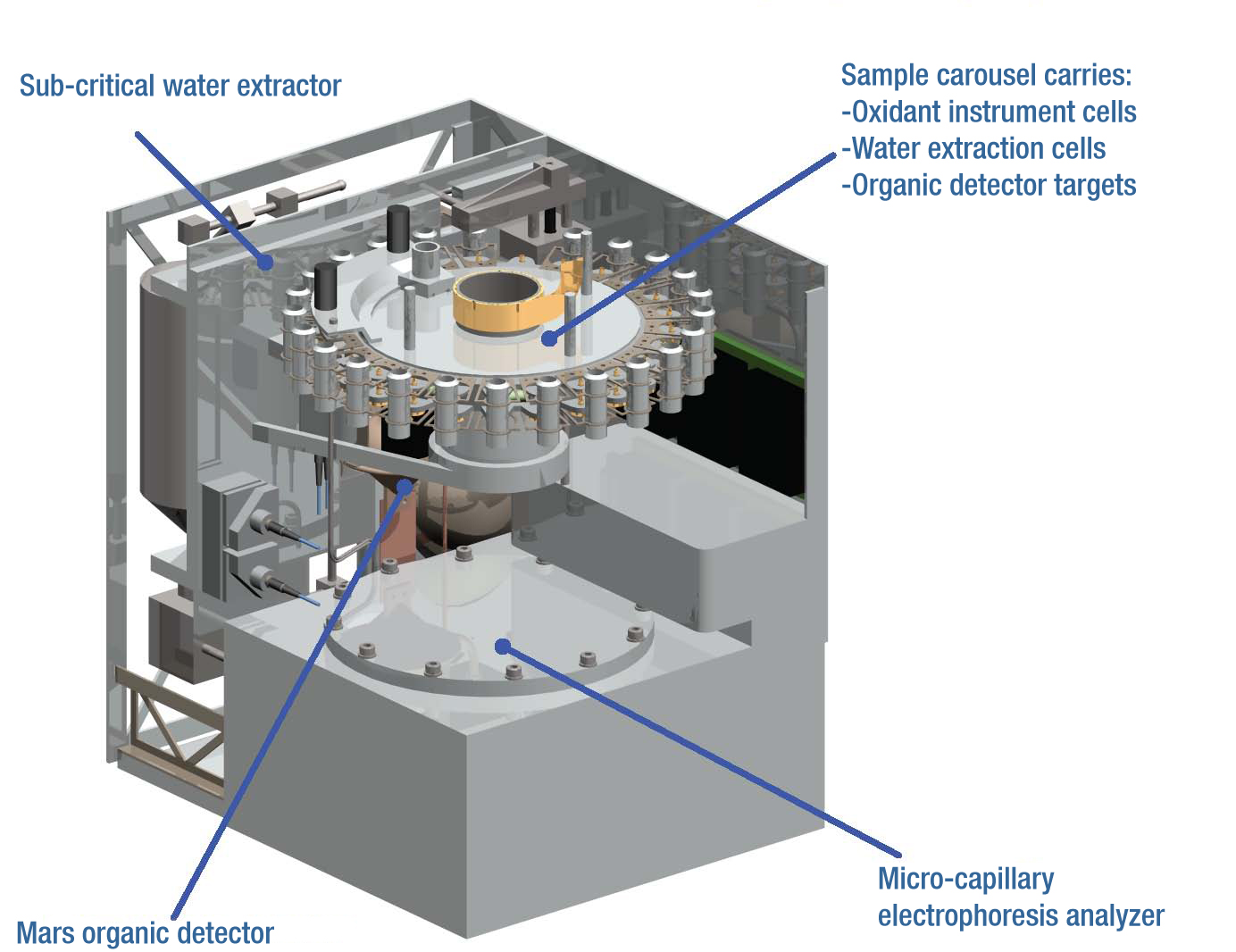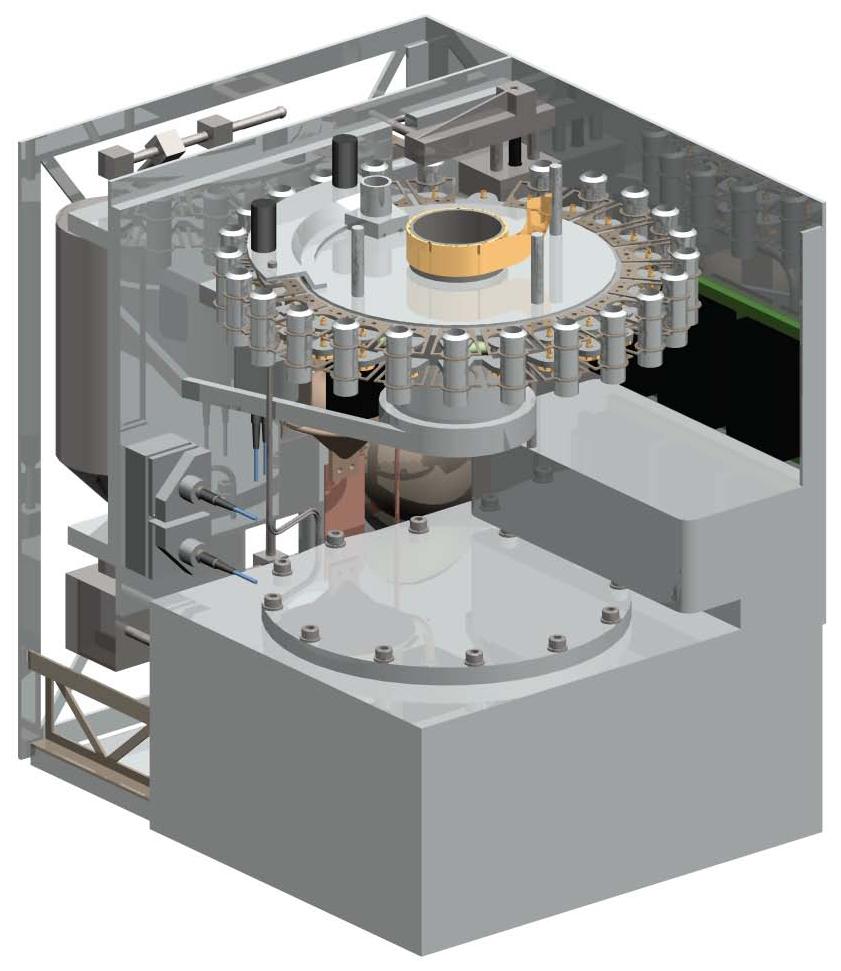
Annotated VersionSome key components of a NASA-funded instrument being developed for the payload of the European Space Agency's ExoMars mission stand out in this illustration of the instrument.
The instrument is the Urey: Mars Organic and Oxidant Detector. It can check for the faintest traces of life's molecular building blocks. If those are present, it can assess whether they were produced by anything alive. It can also evaluate harsh environmental conditions that could be erasing those molecular clues.
ExoMars is planned as a rover to be launched in 2013 and search on Mars for signs of life.
Samples of Martian soil collected by a drill on the rover will be delivered to the Urey instrument. The instrument component called the sub-critical water extractor adds water and heats the sample, getting different types of organic compounds to dissolve into the water at different temperatures. The Mars organic detector uses a fluorescent reagent and laser to detect organic chemicals. The micro-capillary electrophoresis component separates different types of organic chemicals from each others for identifying which ones are present in the sample. The Mars oxidant instrument, part of which is on a separately mounted deck unit not pictured, assesses how readily organic material would be broken down by the radiation, atmosphere and soil chemistry of the site.