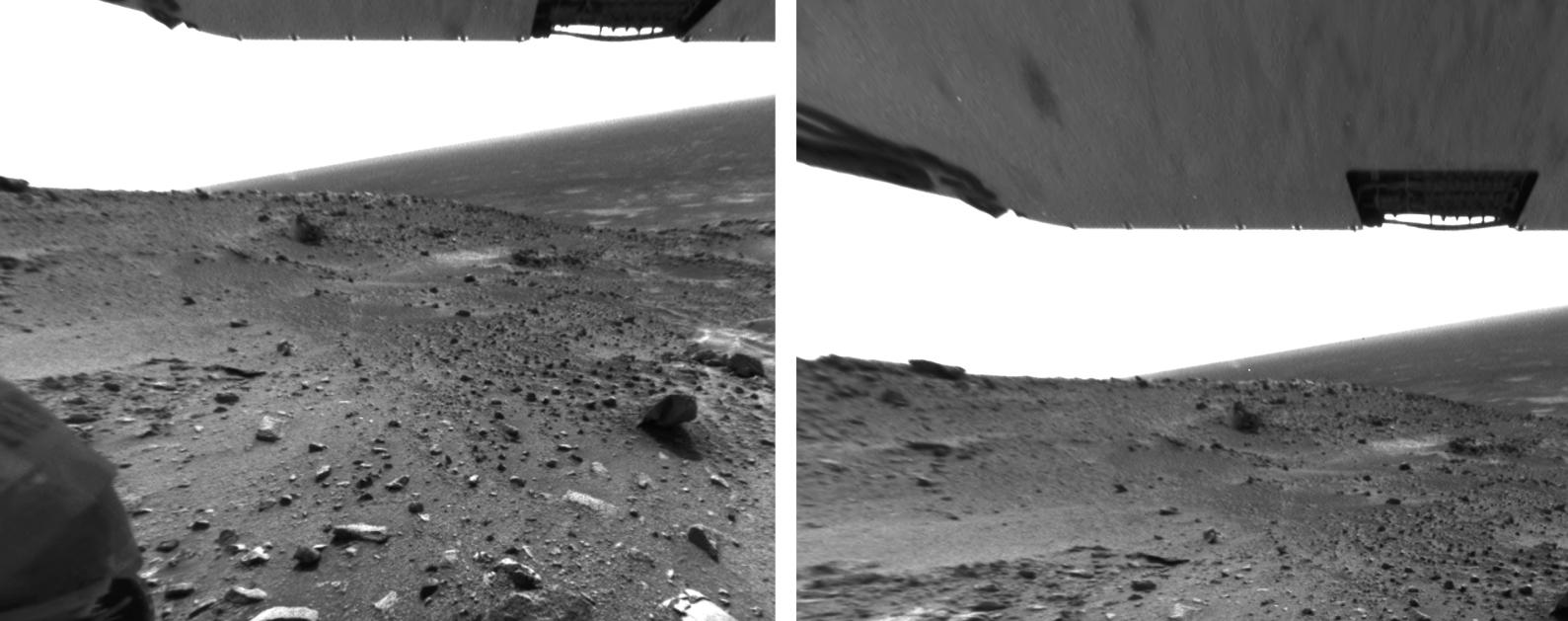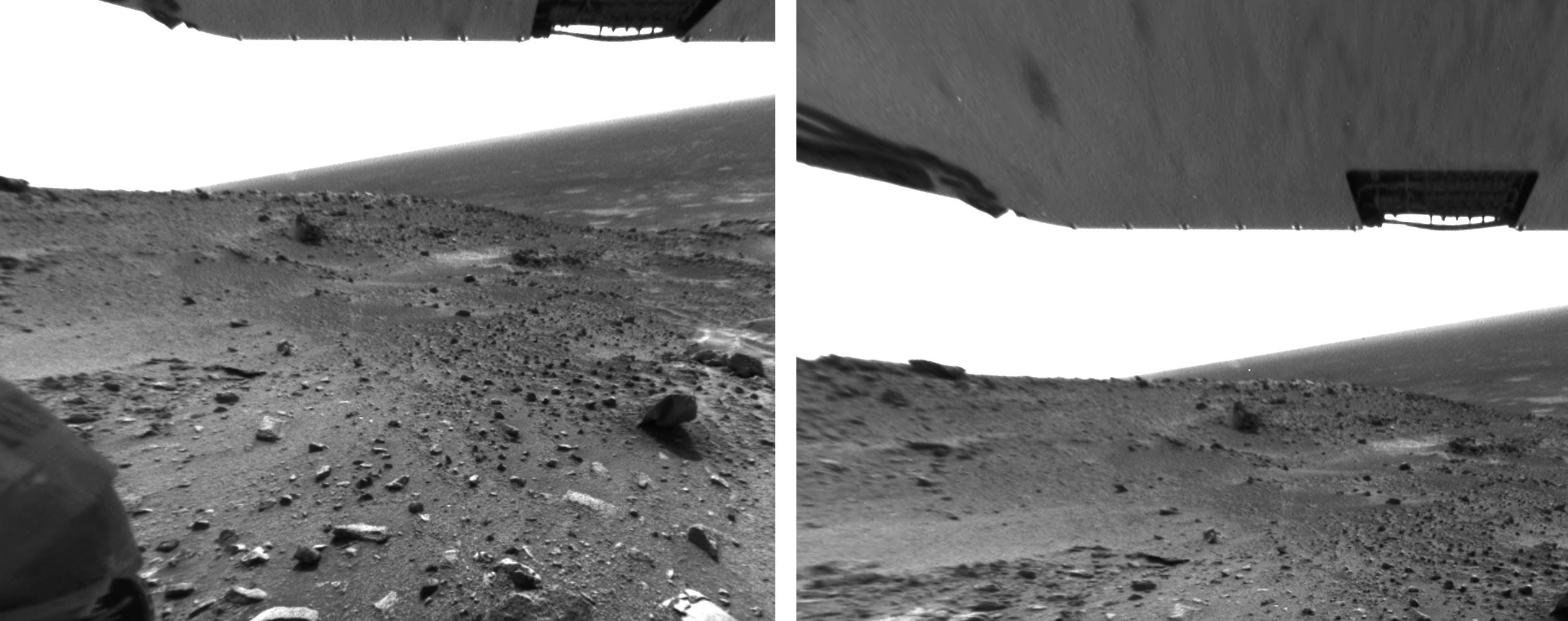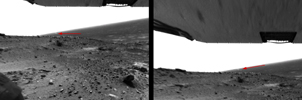
Figure 1 AnnotatedAt the Gusev site recently, skies have been very dusty, and on its 421st sol (March 10, 2005) NASA's Mars Exploration Rover Spirit spied two dust devils in action. This pair of images is from the rover's rear hazard-avoidance camera.Views of the Gusev landing region from orbit show many dark streaks across the landscape -- tracks where dust devils have removed surface dust to show relatively darker soil below -- but this is the first time Spirit has photographed an active dust devil.
Scientists are considering several causes of these small phenomena. Dust devils often occur when the Sun heats the surface of Mars. Warmed soil and rocks heat the layer of atmosphere closest to the surface, and the warm air rises in a whirling motion, stirring dust up from the surface like a miniature tornado. Another possibility is that a flow structure might develop over craters as wind speeds increase. As winds pick up, turbulence eddies and rotating columns of air form. As these columns grow in diameter they become taller and gain rotational speed. Eventually they become self-sustaining and the wind blows them down range.
One sol before this image was taken, power output from Spirit's solar panels went up by about 50 percent when the amount of dust on the panels decreased. Was this a coincidence, or did a helpful dust devil pass over Spirit and lift off some of the dust?
By comparing the separate images from the rover's different cameras, team members estimate that the dust devils moved about 500 meters (1,640 feet) in the 155 seconds between the navigation camera and hazard-avoidance camera frames; that equates to about 3 meters per second (7 miles per hour). The dust devils appear to be about 1,100 meters (almost three-quarters of a mile) from the rover.